
The tropical Five finger fruit fromTrinidad and Tobago, West Indies
The five finger or carambola named may have been derived by the natural shape of the fruit. The five wedged shape brings the thought of mathematics, geometry and the parabola. The Five finger when ripe is quite sweet and has a watery consistency of a pineapple, but with a slight tartness to it.
Latin - Averrhoa carambola.

A parabola is called a locus of points, equidistant from the given point F , called a focus of parabola, and the given straight line, not going through this point and called a directrix of parabola.

wonder of the world plant- Bryophyllum pinnatum
If readers have noticed thebookmann shift to the title, wonder of the world, the reasoning is its resilience which the plant's name is derived from. It can survive anywhere without not much to sustain it.

Bryophyllum pinnatum plant, Life Plant, Miracle Leaf, Goethe Plant
The writer Johann von Goethe was an adamant lover of this plant and studies its mysterious reproducing properties. Every West Indian child should remember putting a leaf between the pages of their copybook. Overtime, the plant would begin to spring roots from the sides of the leaf. Known in Trinidad and Tobago as the wonder of the world, one of the many medicinal properties it contains is the power to strengthen the heart by purifying the blood or to reduce a swelling by using as a poultice over the skin.

Shadow Beni, a Caribbean weed worth in culinary gold
This is the Shadow Beni plant which could be found in your backyard near concrete patches or in cool shaded areas in your garden. It is an ingredient that is used in for marinating fish and meat dishes. It has a flavour that is pungently strong. The herb should be used freshly to salivate your taste buds and to retain the plant's aroma.
My sex slaves; looks like it, smells like it, I want a piece of it
 This is a detail of a tubular flower known as the Dutchman's Pipe because of its shape. In Trinidad and Tobago the rare flower goes by the name, Tref and the vine comes from the Aristolochiaceae family. At bloom, the seductive orifice lures insects to a large cavity located at its core. The purpose is for sex.
The plant resembles a human fetus in the womb, and was once thought to facilitate child birth.
In the 1500s, the Swiss herbalist Paracelsus originated the Doctrine of Signatures, he believed that the shape, colour, taste, smell and other properties of a plant can hint its use in healing.
The flowers also emits a foul pungent odor and the Insects are trapped inside until the plant releases pollen. Then they are free to escape pollen laden and lured once again to another receptive flower.
Some where in the nervous system of this weed, it is likely saying to its executioner; Ah nice, yuh didn't no, Ah pretty yes, Ah lovely, is meh beauty gene......yuh know yuh ca destroy what make yuh heart go hmm.
 For the most part, weeds are likely to be uprooted to ensure your flower bed is immaculately clean. This gives the plants, the ones you are caring for the opportunity to blossom without fighting for nutriments or direct sun light drained from other unwanted plants.
But if you step back for a moment and look at nature and the order of things, it all boils down to one gene. The selfish one that says; Fuck You! I'll take what you have and spread my seed so I can out beat you and populate my kind- Ha!
You see it with wars, you see it in governing powers, religion, sports, business, courting or anyone out following their inner drive for survival and the possible means for self preservation. This is pretty harsh and for weeds, their time are very short lived if they settle down in one of those manicured plots maintained by man. Armed with an arsenal of cutting tools to swipe away those unlikely weeds. Its day has come or has it? -thebookmann
Where I rest, thus shall I sustain life
 The Bromeliad plant Tillandsia fendleri is quite common in Trinidad and Tobago and actually it is quite lovely to observe the method in which the plant disperses its seeds. There are sacs at the top of the stem, and as the pod opens, thatches of silk haired strands are release into the air by a gentle gust of wind. The shape of the seed is best described as a wire framed umbrella that hovers in flight briefly and then disappears into the heavens.
Bromeliad can sustain itself by the atmosphere alone, and you may see the plant attached to electric poles, or between cracks on concrete. They are also from the family of the Pineapple.
In gardens across Trinidad and Tobago, many varieties of the Bromeliads are used to decorate around a garden's floor bed. Epiphytes, or air plants are considered a type of parasite because they attached themselves to the branches of trees, but they survive off the moisture and nutrients from the air and rain.
 If one has previously observed, the older photographs on this post lacked aesthetic quality produced from the modified Minolta Dimage 7i which suddenly failed, and abruptly ended the series on flowers. And trying to duplicated it just does not work, no matter how hard you try. Photography should be effortless. The Canon Pro 1 which the majority of photographs on this blog has been taken is rather a unsubstantial tool catering for candid shots using a tripod if possible. The grain can be noticed from 200 ISO. But as the saying goes, every thing has its place, make due with what you have and the best is yet to come. But the greater lesson is to focus on what you love no matter how difficult its appearance may be. -thebookmann
Suck on others and breed
 These are the dispersed seeds from bromeliad plant. Actually they are quite lovely to see when the plant is ready to spawn. From a open cone at the crown of the plant's stem, thatches of silk haired strands expel into the air. The shape is best described as a wire framed umbrella.

The Caribbean series of Fruits continues. This time it is a composition of fruits....namely a slice of watermelon and a dried Okra
Okra is quite loved in Trinidad and Tobago and it is a vegetable that originates from West Africa. It is the main ingredient in Coocoo which is type of Polenta. Coocoo is a Sunday meal which is generally served with Callaloo and fried King fish. Callaloo also has okra and coconut milk which is added to a mixture of boiled Callaloo Bush and salted meat. Its greenish and gluey consistency may not be appetizing, but it is delicious to the pallet. But some people dislike the mucus texture of the okra seeds. To test how young a okra is, the tip of the fruit should break off easily.
Trinidad may not be blessed with the finest beaches, but on Saturdays and Sundays people commute to the coastal areas for the day to take a good sea bath. And nothing better can describe the Caribbean as the breeze hits your saltwater soaked skin while you are devouring a slice of watermelon.
Watermelon in art: In her last work produced in 1954, a still life of watermelons, the Mexican painter Frida Kahlo inscribed on the painting the words, Viva la vida (Long Live Life)

The is a example how plants in nature take on a human trait. The leaves from this tropical plant looks like a prehistoric row of teeth. It is actually a bromeliad which bears the pineapple fruit. Hence; What look tough on the outside is rather sweet on the inside.
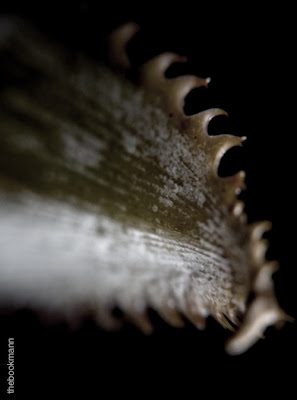
My nuts are the sweetest....

The method in which a climber ascends up a coconut tree trunk using a rope looped under his foot
The coconut palm is really a marvel. From the fruit to its fibres, many things are produced. In Trinidad and Tobago, the ribs from a branch are used to make a yard broom. All bunched up a tied with a strip of cloth. The ribs also provide the structure for homemade kites. Oils and the raw coconut are used in food preparation and beauty remedies.
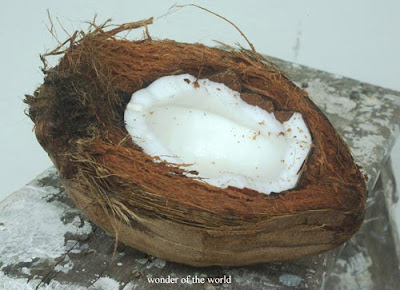
The husk and flesh of an opened dry coconut.
Coconut is used to make of all things coconut ice cream, freshly churned from a ice cream maker using salt and ice. In rural areas, older ladies are out on the street with their buckets selling the REAL COCONUT. Thick smooth ice cream and churned by hand.

But above all things, coconut water is the healer, and the people who supply the water say, like all hard work, it is hard work. Collecting and deposing of the nut dispenses the same amount of energy. The Queen's Park Savannah is a place where Trinidadians line up in queue next to their favorite Cold Nuts vendors who generally proclaim, 'My nuts are real sweet'. And after the satisfying quenching of this purifying water, a favorite is the soft jelly from the nut itself. You just have to asked and a skillful vendor would make a spoon from the outer shell with one chop of his cutlass. This is to scoop out the delicious white jelly from the nut's shell.

This is the tender flesh from the Sapodilla fruit. The colour is a dusty purple and its fragrance makes you want to automatically smell it immediately. Sapodillas have a honey but slightly matted taste. The fruit is extremely sweet and one serving can satisfy your natural sweet craving. The thin sandy brown skin is also edible, but can be peeled before serving.

Sapodillas can be described as having the constancy to guava jelly which in itself is a delicious delicacy in Trinidad and Tobago. The flesh just melts in your mouth.
I rather have a Julie over sex or I put a mango in his casket because he loved the fruit so dearly.

The face of a Julie mango
I fall down flat on meh bottom and see stars....This can relate to any child who tried to pick a mango and slipped on the mossy branch and fell off the tree. The tropical fruit is loved by many West Indians and it can be an obsession. The connoisseur will insure that when a mango is picked, it better not be bruised. True mango lovers will suck the seed dry.
In Trinidad and Tobago, mangoes come in many varieties. There is mango Starch, Rose, Vere, Calabash, Dooduce, long Mango and the much delicious Julie Mango. Mangoes can be curried as in a chutney or preserved.
The West Indian Jasmine

This garden shrub is quite popular in Trinidad and Tobago and it may be fascinated to mathematicians by the spiral arrangement of its stems. When the buds open, the four petal flower make up a cluster which has a shape of a bulb or umbrella. In this cluster as any as may fifty flowers are comprise in commonly yellow or orange. The plant also produces a berry.

Children often play with the flower by spinning the stem between their fingers. This acts as a propulsion to lift the Ixora into the air.
Nobody sees a flower, really, it is so small. We haven't time - Georgia O'Keefe

When you think of orchids, Georgia O'Keefe comes to mind. She is considered to be one of the greatest and well respected twentieth century American painters. O'Keefe is known for her orchids and desert landscapes paintings particularly produced in New Mexico. Her compositions of the flower aroused the seductiveness of the female genitalia, although the name Orchid is derived from Greek meaning testicles.
In Trinidad and Tobago many orchid enthusiasts take great pride with their plants. Rotten bark or the husk of a coconut tree are ideal to catch a plant.
The Courage Plant

The flower of the Thyme
West Indians love to marinate their meats. Salt and pepper just isn't enough to satisfy their culinary taste. To do this, a concoction is made combining a variety of home-grown herbs called green seasoning. Thyme is one of its main ingredients.
This is English thyme which has a stronger aromatic smell to the finer Spanish variety grown in Trinidad and Tobago. The oils from the plant is known to treat melancholy.
Watch meh but don't pick meh

This is the delicate flower from the Plumbago plant. The scrub has its own charm and beauty particularity with its elongated tube stem. If your brush against the plant, the floral leaf (sepal) tends to stick on you and this may be a defense used against predictors. The Plumbago flower withers very quickly if picked.
The name Plumbago is derived from Latin meaning lead, the plant has the healing properties of curing lead poisoning.
The Beauty or Miracle Plant

In Trinidad and Tobago, the Aloe plant can be found in many gardens. Your Grandmother, Aunt or Tanti will have a cluster of Aloes ready to sooth the bruise you got while trying to pick plumes in her backyard.
The gel from the plant has a bitter taste to it, but the beneficial properties are to give your belly a good clean out. It can act as a natural laxative. The yellow flower is tubular in shape and blooms in clusters from a stem that extends from the core of the plant to the hight of 2 feet.


 In 1998, Wendy Fitzwilliam was crowned Miss Universe. It was a proud moment for Trinidad and Tobago as she was the second Trinidadian to receive the title. But if one remembers, Ms. Fitzwilliam wore a Hibiscus in her hair. The Hibiscus is the national flower of Hawaii and it also thrives in Trinidad and Tobago.
In Caribbean folk medicine, the flowers are used for herbal tea remedies for ailments such as high blood pressure or constipation. Chows are also made. There are many varieties or grafted variations of this tropical scrub, but in 1988 many Hibiscus trees were devastated by the pink mealy bug infestation. -thebookmann
Flamboyan-de-Jardin

This is the Pride of Barbados and a scrub you don't see as often as before. The delicate flower can be identified by its filaments that droop from the centre of the inflorescence yellow and orange flower. At carnival time, many designers often duplicate the flower as part of their Carnival costume.
The extracted juice from the leaves is said to cure fever and it can also induce abortion in the first trimester of pregnancy by a part of the root.
Disclaimer:
Views expressed on thebookmann are not affiliated with any Art Organizations and an “Art Review” may be open to interpretation as it is an observation at face value.
Amendments to such articles if misleading or with grammatical errors shall be corrected accordingly.
All photographs, Feinin studies, accompanying quotes, articles and visual headers appearing on site are the exclusive property of Richard Bolai © 2004 - 2010 All Rights Reserved.
Any fare use is restricted without written permission


